Have you ever noticed how a song you didn’t like at first suddenly becomes your favorite after hearing it multiple times? Or how a brand feels more trustworthy simply because you’ve seen it often? This common experience highlights an important psychological concept behind why repetition makes things likable. Our preferences are not always based on logic—they are often shaped by repeated exposure.
This phenomenon is explained by the exposure effect, a psychological principle that suggests people tend to develop a preference for things simply because they are familiar. Over time, repeated exposure creates a sense of comfort, which leads to a familiarity bias. This bias influences decisions, emotions, and even long-term preferences, often without conscious awareness.
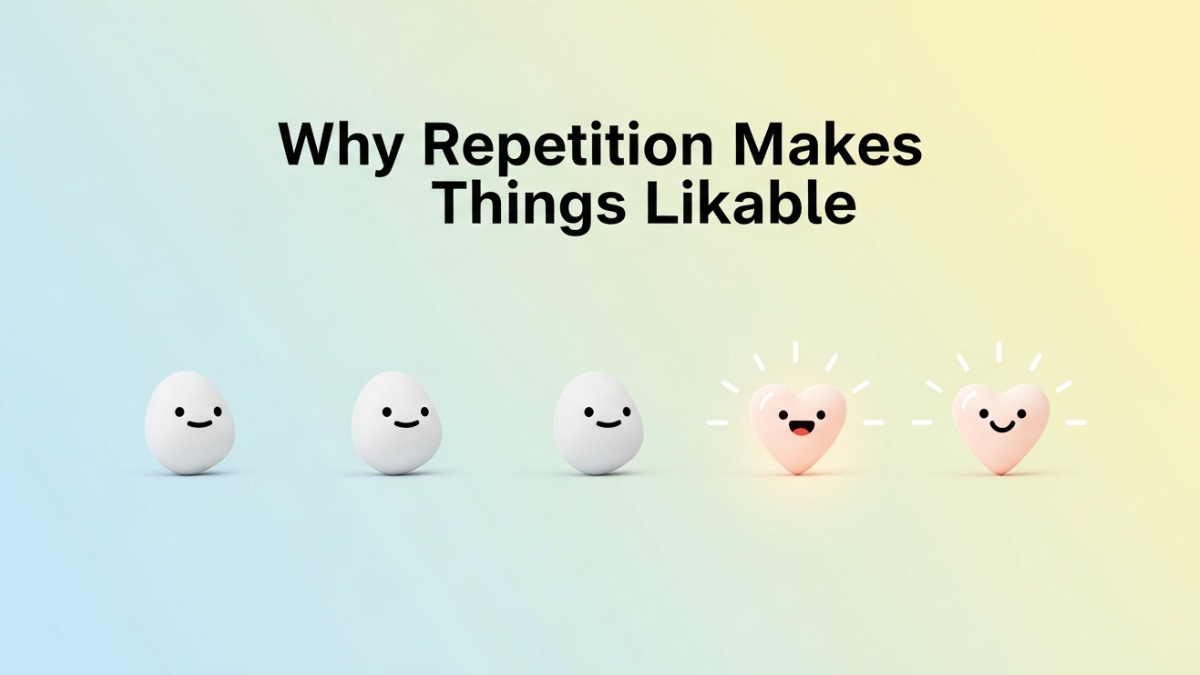
The Science Behind the Exposure Effect
The exposure effect is one of the strongest reasons why repetition makes things likable. When we encounter something repeatedly, our brain begins to process it more easily. This ease of processing creates a positive emotional response, making the object feel more appealing.
In terms of familiarity bias, the brain prefers what it recognizes because it requires less effort to understand. This efficiency creates a sense of safety and comfort, reinforcing positive feelings.
Key aspects include:
- Repeated exposure increases recognition
- Familiar items feel safer and more predictable
- The brain prefers low-effort processing
- Positive emotions develop over time
These factors clearly explain why repetition makes things likable, as familiarity becomes a key driver of preference.
How Familiarity Bias Influences Preferences
Familiarity bias plays a central role in shaping our likes and dislikes. When something becomes familiar, the brain automatically assigns it a higher level of trust and comfort. This is a major reason why repetition makes things likable.
For example, people are more likely to choose a product they have seen before, even if they know little about it. This bias affects not only consumer behavior but also social interactions, music preferences, and even opinions.
Here is a comparison to understand this better:
| Exposure Level | Recognition Level | Comfort Level | Likability Level |
|---|---|---|---|
| First Exposure | Low | Low | Low |
| Repeated Exposure | Moderate | Medium | Increasing |
| Frequent Exposure | High | High | High |
| Overexposure | Very High | Variable | May decrease |
This table shows how the exposure effect and familiarity bias work together to explain why repetition makes things likable.
The Role of the Brain in Repetition
The brain is designed to detect patterns and build familiarity. When something is repeated, it becomes easier to process, which creates a sense of fluency. This fluency is a key part of the exposure effect.
As processing becomes easier, the brain associates the experience with positive feelings. This connection strengthens familiarity bias, reinforcing the idea of why repetition makes things likable.
Important brain-related factors include:
- Reduced cognitive effort with repetition
- Increased processing speed
- Stronger memory connections
- Positive emotional associations
These processes show how repetition directly influences perception and preference.
Repetition in Everyday Life
Repetition is everywhere—from advertisements to social media, music, and daily routines. Businesses and creators use the exposure effect intentionally to build recognition and trust.
For example, advertisements often repeat the same message multiple times to create familiarity. This strategy leverages familiarity bias, making people more likely to choose a product.
Common examples include:
- Songs becoming more enjoyable after multiple listens
- Brands becoming recognizable through repeated ads
- Social media trends gaining popularity through repetition
- People feeling more comfortable with familiar faces
These examples highlight why repetition makes things likable in real-world situations.
When Repetition Becomes Too Much
While repetition can increase likability, too much exposure can have the opposite effect. This is known as overexposure, where the brain becomes bored or irritated.
In terms of the exposure effect, there is an optimal level of repetition. Beyond that, familiarity bias may weaken, and the item may lose its appeal.
Signs of overexposure include:
- Feeling bored with repeated content
- Reduced interest in familiar items
- Negative reactions to excessive repetition
This balance is important in understanding why repetition makes things likable, as it shows that moderation is key.
Emotional Connection and Repetition
Repetition also strengthens emotional connections. When something becomes familiar, it often feels more personal and meaningful. This emotional link enhances the exposure effect and reinforces familiarity bias.
For example, a song heard during important moments may become more likable due to repeated exposure and emotional association. This combination explains why repetition makes things likable on a deeper level.
The Power of Repetition in Decision-Making
Repetition influences not only preferences but also decisions. People are more likely to trust and choose familiar options, even when alternatives may be better.
This decision-making process is driven by familiarity bias, which simplifies choices by favoring known options. The exposure effect ensures that repeated items stand out, making them more appealing.
This explains why repetition is such a powerful tool in marketing, communication, and everyday interactions.
Conclusion
In conclusion, the reason why repetition makes things likable is deeply rooted in the brain’s preference for familiarity and ease of processing. Through the exposure effect and familiarity bias, repeated exposure creates comfort, trust, and positive emotions.
From music and advertising to personal relationships, repetition shapes how we perceive and choose things. Understanding this concept helps us recognize the subtle ways our preferences are influenced and allows us to make more informed decisions.
FAQs
Why do I start liking things after repeated exposure?
This happens due to the exposure effect, where familiarity increases comfort and likability.
What is familiarity bias?
Familiarity bias is the tendency to prefer things that are familiar over unfamiliar ones.
Can repetition make something less likable?
Yes, too much repetition can lead to overexposure and reduce appeal.
How is repetition used in marketing?
Marketers use repetition to build recognition and trust through the exposure effect.
Is repetition always effective?
It is effective up to a point, but excessive repetition can have negative effects.
Click here to know more.