For many people, bedtime no longer begins with quiet rest or relaxation—it begins with scrolling. News updates, social media feeds, short videos, and endless notifications often become the final activity before sleep. What feels like “just five minutes” can easily turn into an hour of unconscious screen time. This growing doomscrolling before sleep habit has become one of the most common digital routines in modern life.
The rise of the doomscrolling before sleep habit is closely linked to increasing night scrolling and its strong mental health impact. People often use phones at night to relax, distract themselves, or catch up on missed updates, but the result is often the opposite. Instead of calm, bedtime scrolling can increase anxiety, overstimulation, and emotional exhaustion. This makes understanding the habit important for both sleep quality and long-term mental wellness.
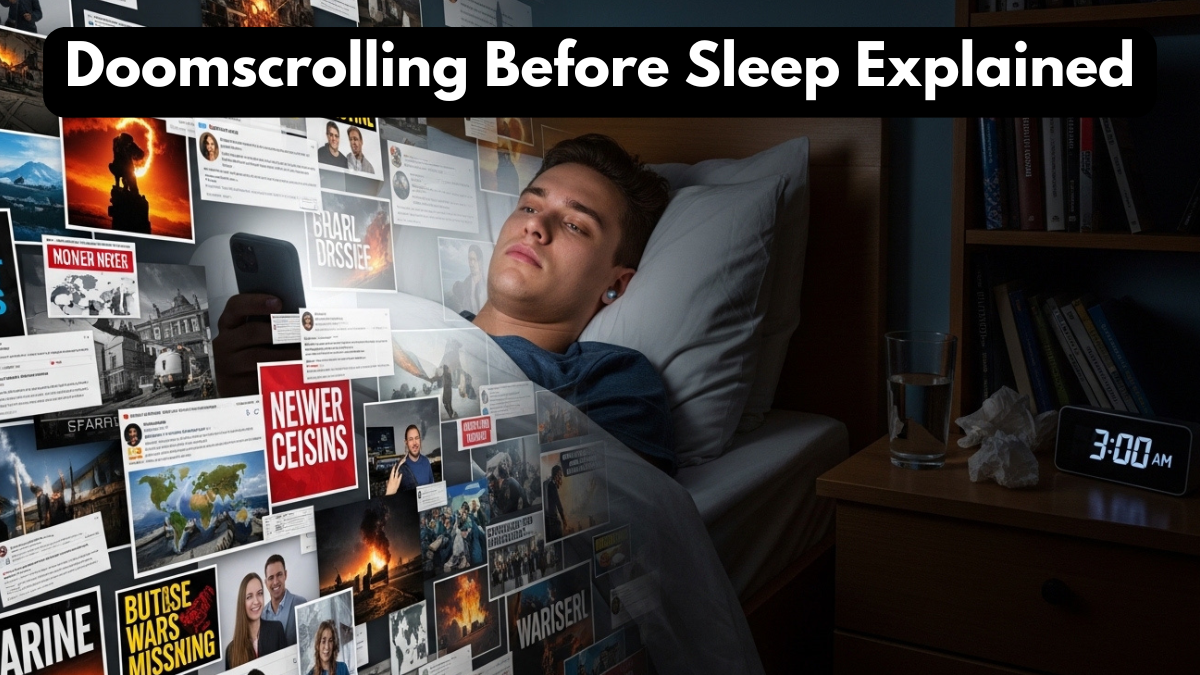
What Is Doomscrolling Before Sleep Habit?
The doomscrolling before sleep habit refers to repeatedly consuming endless content—especially stressful news, emotional social media posts, or negative information—right before going to bed. Unlike casual scrolling, doomscrolling often continues even when the content increases stress or emotional discomfort.
This form of night scrolling is usually driven by curiosity, anxiety, or the feeling of needing to stay updated. People may keep reading upsetting news or comparing their lives to others on social media, even when they know it is affecting their mood.
The strongest mental health impact comes from the brain staying emotionally active at a time when it should be slowing down. This is why the doomscrolling before sleep habit often leads to poor sleep and next-day fatigue.
Why Night Scrolling Has Become So Common
There are several reasons why night scrolling has become such a strong part of daily life. Bedtime is often the only quiet personal time many people get, making the phone feel like both entertainment and emotional escape.
Other common reasons include:
- Stress relief after busy workdays
- Fear of missing important updates
- Social media habit carried from daytime
- Delayed sleep routines caused by screen addiction
- Emotional distraction from loneliness or anxiety
- Easy access to endless content without stopping points
This repeated behavior strengthens the doomscrolling before sleep habit because the brain starts expecting digital stimulation before rest. Over time, the mental health impact becomes more noticeable through poor sleep patterns and emotional burnout.
How Doomscrolling Affects Sleep Quality
The biggest problem with the doomscrolling before sleep habit is how it disrupts natural sleep. Both the emotional content and the blue light from screens make it harder for the brain to transition into rest.
Common effects include:
- Delayed sleep timing
- Difficulty falling asleep quickly
- Restless or poor-quality sleep
- Morning fatigue and low energy
- Increased anxiety before bed
- Reduced focus the next day
This form of night scrolling keeps the nervous system active instead of relaxed. The long-term mental health impact can include stronger stress patterns, emotional exhaustion, and sleep-related frustration.
Healthy Bedtime vs Doomscrolling Routine
Understanding the difference between healthy nighttime habits and digital overuse helps explain why this issue matters so much.
Here is a simple comparison table:
| Healthy Bedtime Routine | Doomscrolling Before Sleep Habit |
|---|---|
| Reading or quiet relaxation | Endless social media scrolling |
| Calm mental slowdown | Emotional overstimulation |
| Consistent sleep timing | Delayed bedtime every night |
| Better sleep quality | Interrupted or restless sleep |
| Lower stress before bed | Higher anxiety and comparison |
This table shows how night scrolling changes emotional energy before sleep. The mental health impact becomes stronger when this pattern turns into a daily habit.
Emotional Effects Beyond Sleep
The doomscrolling before sleep habit affects more than just physical rest—it also shapes emotional health. Negative news and comparison-heavy content create stress that often stays in the mind long after the phone is put down.
People may experience:
- Overthinking late at night
- Feeling emotionally heavy before sleep
- Increased comparison and self-doubt
- Reduced motivation the next morning
- Stronger anxiety around world events or personal life
This repeated night scrolling creates mental overload instead of emotional release. The long-term mental health impact is often subtle at first but becomes stronger through repeated exhaustion and emotional dependence on screens.
How to Reduce Night Scrolling
Breaking the doomscrolling before sleep habit does not require complete phone avoidance. The goal is to create a calmer bedtime routine that helps the brain disconnect gradually.
Helpful strategies include:
- Setting a fixed phone-off time before bed
- Keeping the phone away from the pillow
- Replacing scrolling with reading or journaling
- Avoiding stressful news late at night
- Using night mode and reduced screen brightness
- Creating a simple relaxing sleep routine
These small changes reduce night scrolling and protect both sleep quality and emotional balance. Better bedtime routines also reduce the long-term mental health impact of digital overstimulation.
Conclusion
The doomscrolling before sleep habit shows how deeply smartphones have entered personal routines, especially during the most important recovery time of the day. What feels like harmless bedtime scrolling often creates delayed sleep, emotional stress, and long-term mental fatigue. Awareness is the first step toward change.
Reducing night scrolling does not mean rejecting technology—it means protecting rest and emotional peace. Understanding the true mental health impact helps people build healthier boundaries with screens. Sometimes the best thing for better sleep is not another scroll, but simply putting the phone down.
FAQs
What is doomscrolling before sleep habit?
The doomscrolling before sleep habit refers to endlessly scrolling through stressful news, social media, or emotional content before going to bed, often harming sleep quality.
Why is night scrolling so addictive?
Night scrolling feels addictive because it offers quick entertainment, emotional distraction, and endless updates, especially during quiet bedtime hours.
What is the mental health impact of doomscrolling?
The mental health impact includes anxiety, overthinking, emotional exhaustion, poor sleep, and reduced focus during the next day.
Can doomscrolling cause sleep problems?
Yes, the doomscrolling before sleep habit can delay sleep, reduce sleep quality, and create restless nights due to screen light and emotional stimulation.
How can I stop night scrolling before bed?
Setting a phone-off time, avoiding stressful content, and replacing scrolling with relaxing bedtime habits can help reduce night scrolling effectively.
Click here to know more.