Understanding accents and perception has become an essential part of modern communication studies. Every accent carries subtle signals that influence how people judge intelligence, trustworthiness, warmth, and credibility. While we often assume that words alone shape meaning, social psychology continues to show that accents deeply affect how messages are received. The way someone sounds can shape how much we believe them, how comfortable we feel around them, and even how competent we assume they are. This article explores why accents have such powerful effects and how these unconscious reactions have become a defining part of human interaction.
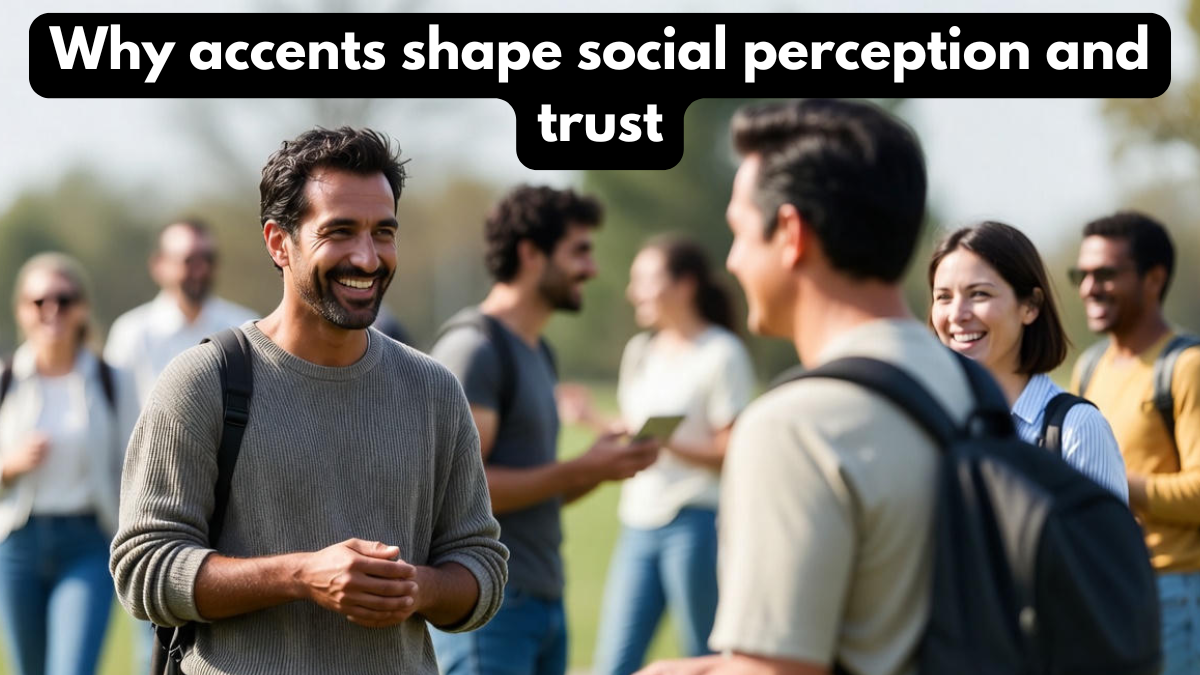
How accents influence first impressions
The relationship between accents and perception starts forming in the first few seconds of hearing someone speak. People quickly categorize accents into familiar and unfamiliar patterns, often without realizing it. According to research in social psychology, this rapid evaluation triggers judgments based on stereotypes, cultural exposure, and personal experiences. For example, an accent associated with authority may increase perceived expertise, while one associated with unfamiliar regions may be judged more cautiously.
These reactions do not reflect actual skill or character—they reflect conditioned responses. Because of this, accents and perception play a major role in interviews, customer service, teaching, and public speaking. The tone, rhythm, and pronunciation of speech become cues that listeners rely on when forming opinions, even when the speaker delivers clear and accurate information.
Accent bias and trust-building
Trust formation is deeply influenced by accents and perception, especially when communication involves uncertainty or persuasion. Listeners often filter the speaker’s message through subconscious biases shaped by culture and media. In social psychology, this phenomenon is linked to “ingroup vs. outgroup perception,” where people trust voices that sound more familiar or similar to their own.
Accent bias can impact:
- Hiring decisions
- Customer interactions
- Medical communication
- Classroom engagement
- Leadership acceptance
This is one reason why global organizations now train teams to become aware of accent-driven bias. Greater awareness of how social psychology influences perception can reduce unfair judgments and improve inclusive communication.
Table: How Different Factors Influence Accent Perception
| Factor That Shapes Perception | Impact on Listener Judgment | Link to Social Psychology |
|---|---|---|
| Familiarity with accent | Higher trust, more comfort | Ingroup bias |
| Media portrayal | Shapes stereotypes | Social conditioning |
| Speaker confidence | Increased credibility | Impression formation |
| Cultural exposure | Reduced bias | Social learning |
| Context (professional, casual) | Changes expectations | Situational cues |
This table demonstrates how accents and perception interact with psychological frameworks. Every factor ties back to how individuals internalize social norms and apply them when evaluating speech.
Why accents affect emotional responses
Speech patterns influence not only cognitive assessments but emotional reactions as well. Certain accents may sound warm and friendly, while others may appear formal or distant. This happens because the brain associates sound patterns with memories, cultural narratives, or learned associations. In social psychology, these emotional reactions are part of affective conditioning—meaning we react to accents based on prior exposure.
This emotional layer makes accents and perception even more powerful. For example:
- A nurturing accent may make instructions feel more reassuring.
- A sharp or clipped accent may feel more authoritative.
- A rhythmic accent may come across as more expressive.
These interpretations are not universal—they depend on personal experience. Still, the influence is strong enough that brands, politicians, narrators, and customer service teams often choose voices strategically to enhance audience connection.
How global mobility is reshaping accent perceptions
As people travel, migrate, and work across borders, exposure to diverse accents is increasing. This shift is gradually reducing certain biases while also creating new blended speech patterns. Younger generations, accustomed to multicultural environments, are more flexible in their reactions to unfamiliar accents. In this evolving landscape, accents and perception are becoming more fluid, reflecting cultural mixing rather than rigid categories.
From the perspective of social psychology, increased exposure leads to improved empathy and reduced stereotyping. Listeners become more patient, more open, and more skilled at understanding different speech patterns. This trend suggests that accent bias—while still present—can be softened through social and cultural interaction.
Conclusion
The link between accents and perception reveals more than just linguistic differences—it exposes how humans evaluate, categorize, and relate to one another. Rooted in centuries of cultural shaping, these perceptions are deeply tied to social psychology, influencing trust, judgment, and emotional reactions. By becoming more aware of these unconscious biases, individuals and organizations can create more inclusive environments where voices are valued for their meaning, not for how closely they match a listener’s expectations. As the world grows more interconnected, understanding the psychology of accents becomes an essential step toward better communication and stronger human connection.
FAQs
Why do accents influence first impressions?
Accents trigger quick judgments because the brain relies on familiar speech patterns to assess trust and comfort, shaping accents and perception within seconds.
Does accent bias affect workplace communication?
Yes, accent bias can influence hiring, teamwork, and leadership acceptance, which is why understanding social psychology helps reduce these unfair judgments.
Can exposure to diverse accents reduce bias?
Absolutely. The more people hear a variety of voices, the more flexible and fair their accents and perception responses become.
Are some accents naturally more trustworthy?
Not inherently—trustworthiness is subjective and shaped by cultural exposure, media influence, and social psychology conditioning.
Click here to know more.